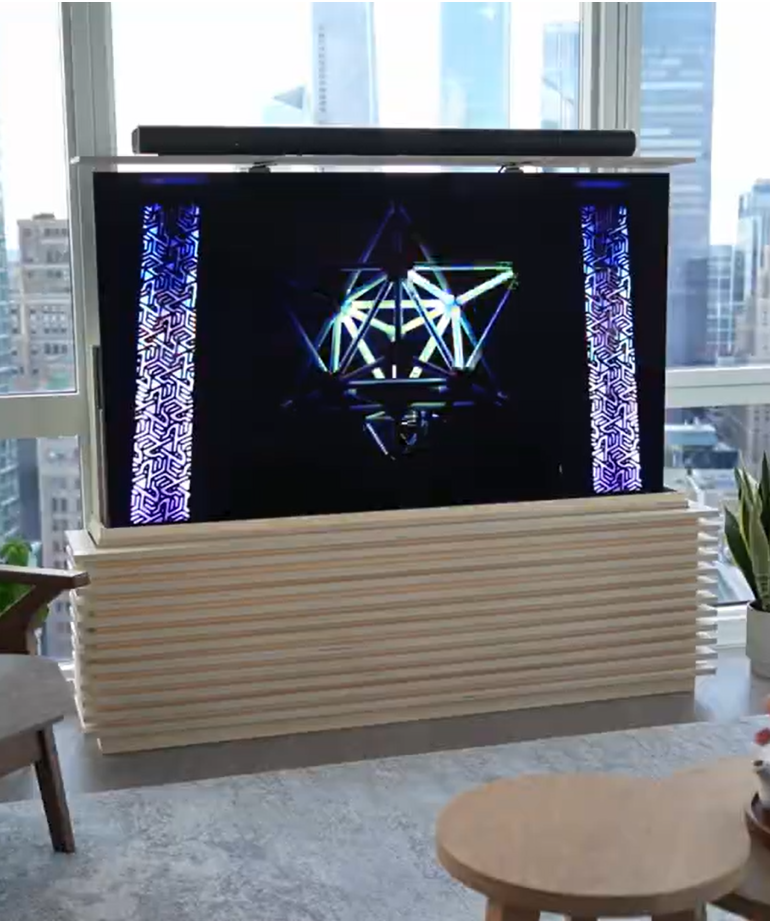
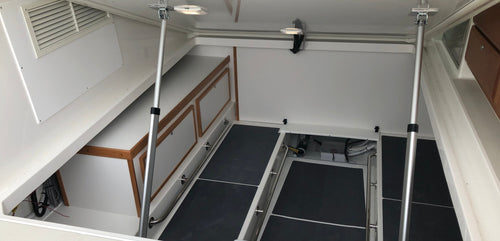
For years, kitchen appliance companies have been developing and inventing ways to conserve space. A microwave can take up a good deal of space that could be used for other purposes. A microwave that sits on a countertop can be unsightly, and one that is built into an oven may still take up too much space. Instead of constantly trying to find new space to store it, why not automate the microwave and store it underneath your counter. You can use the control system to ascend it when needed, and descend it out of the way when not in use. With a little bit of elbow grease, you can easily complete this project for a reasonable cost.


Linear Actuator


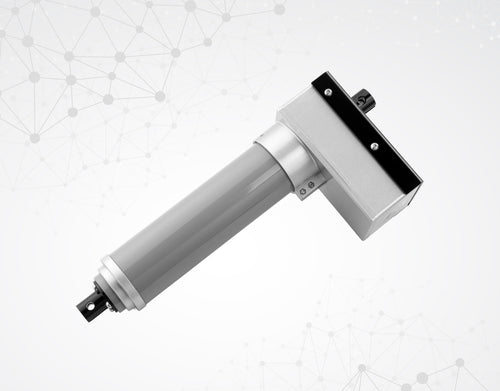
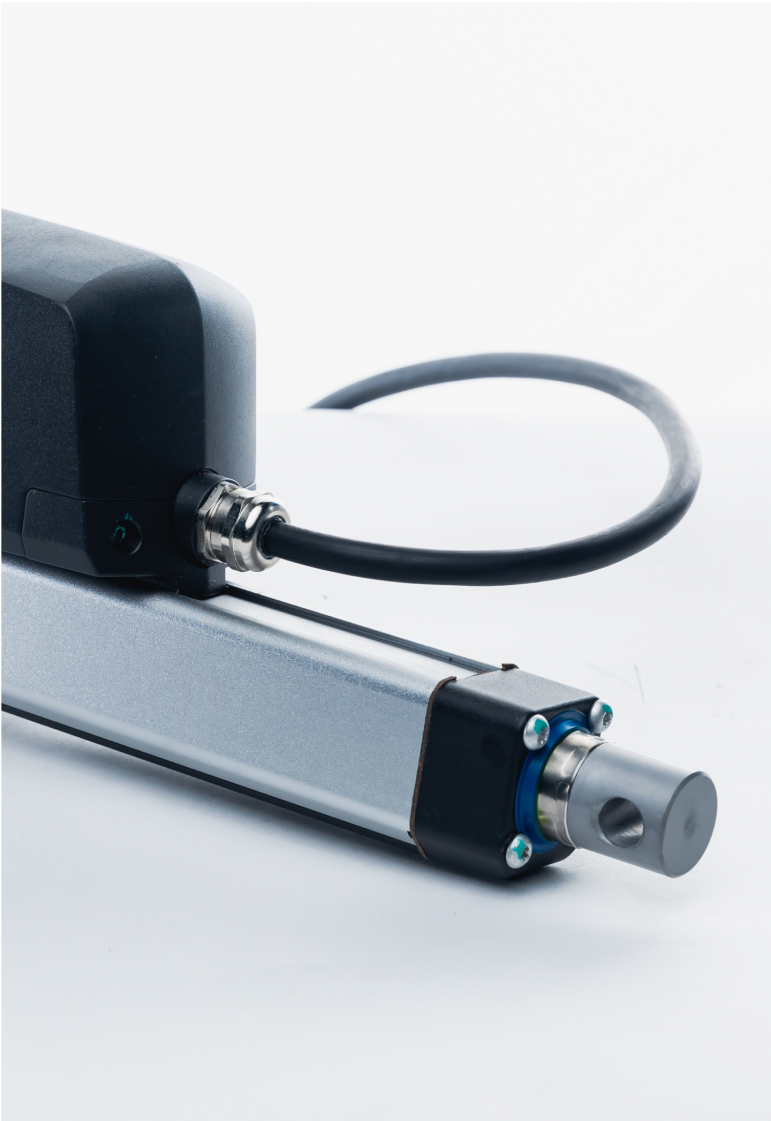
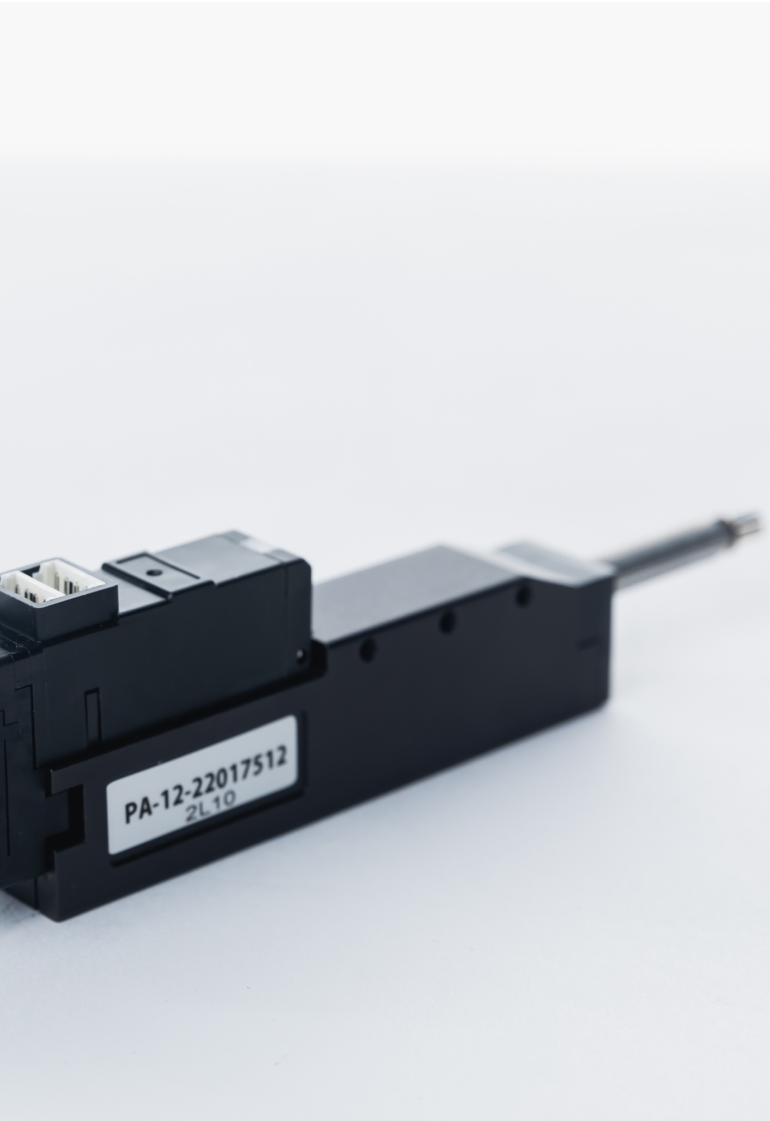
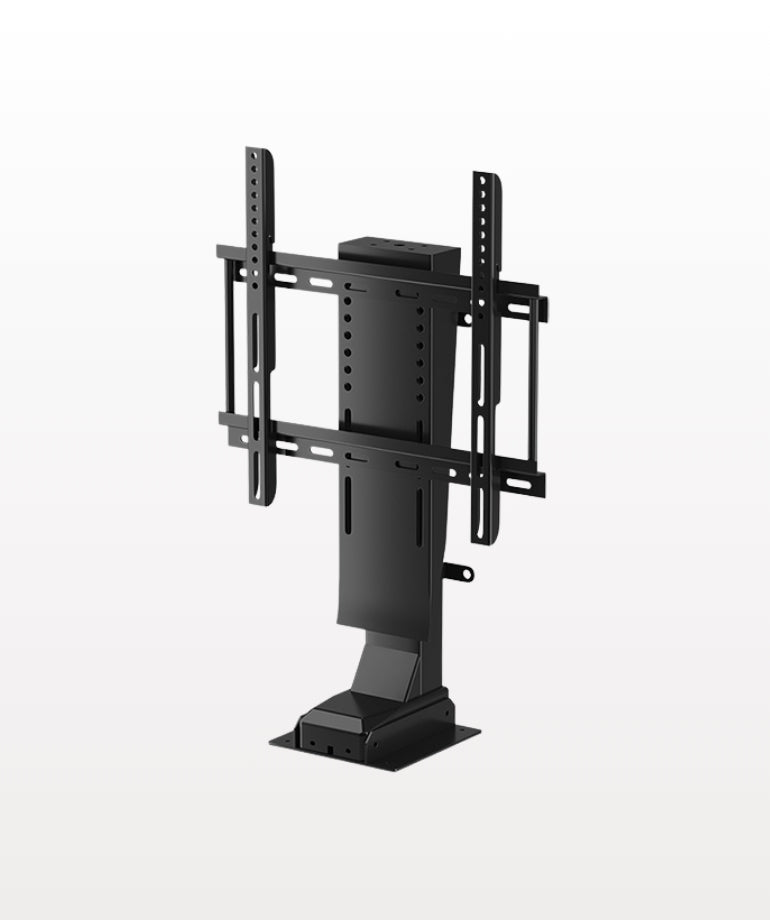
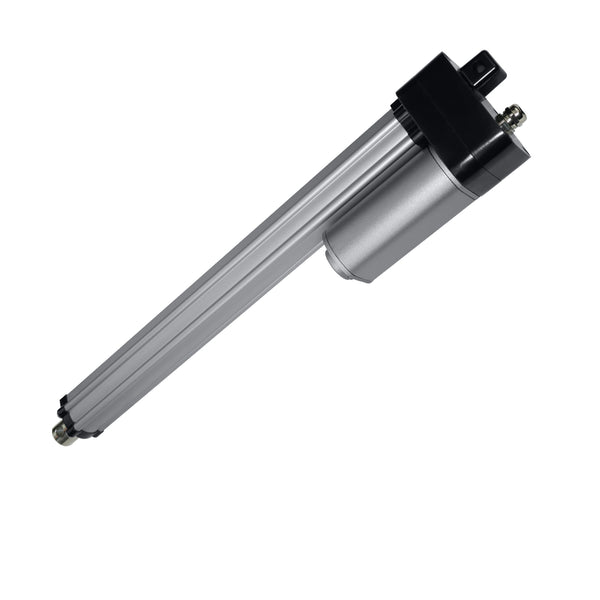
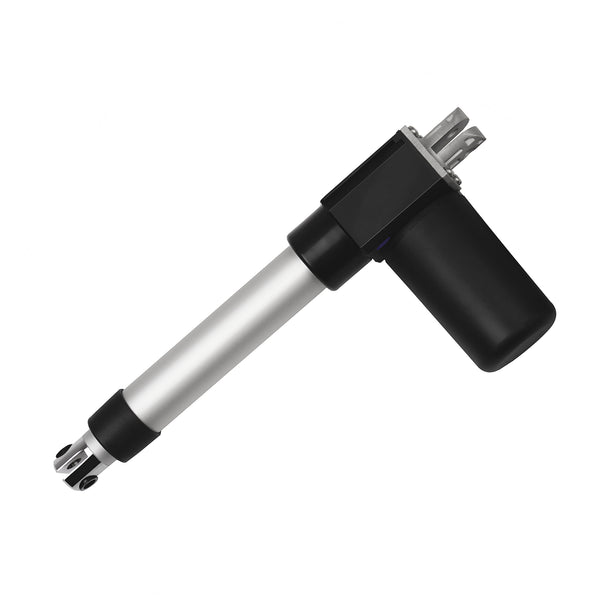
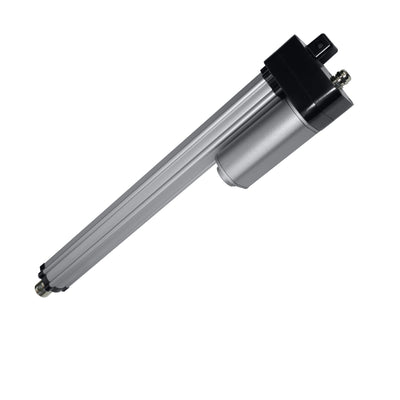
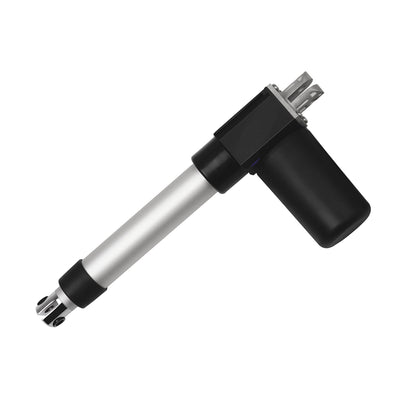
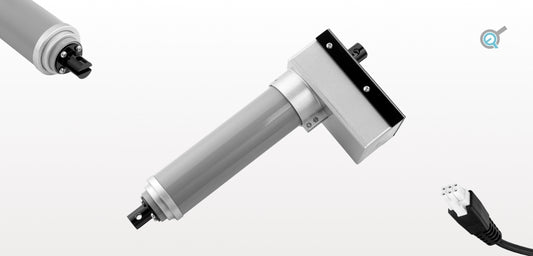
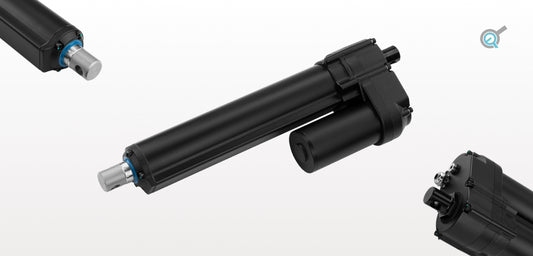
A linear actuator system is perfect for this project. It can handle the load with room to spare and leave you with enough room underneath for extra shelf space. Progressive Automations has in stock many models, force options and stroke size linear actuators. The 150 lbs actuator will be more than enough to lift the counter top platform.


The lift can be built onto a platform that is sleek and modern, so you don’t have to worry about a lift that looks industrial.


The Construction


Little needs to be done to build this project. Start by measuring your dimensions and cutting out the required hole in the counter top. Any shape of cabinet can be used, so long as the table lift can support it.


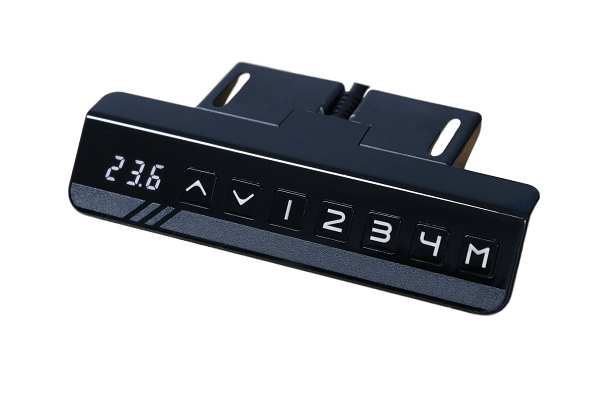
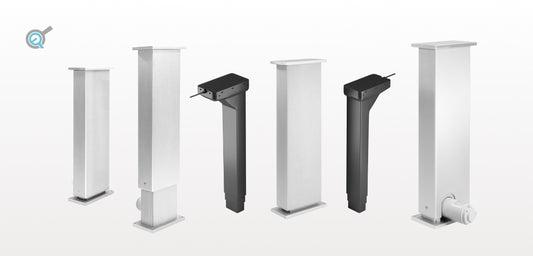
The electric actuator then needs to be attached to the bottom of the cabinet, in a place that supports the load evenly. Attach your cabinet to the lift securely, then attach your control system and that’s it. The average microwave weighs about 20lbs, so including the weight of the cabinet, there is still enough load potential to store items on the top of the cabinet.


Instead of spending thousands of dollars on an oven/microwave combination or creating more unnecessary space in your kitchen, use this simple project to make your life easier and your kitchen work for you.


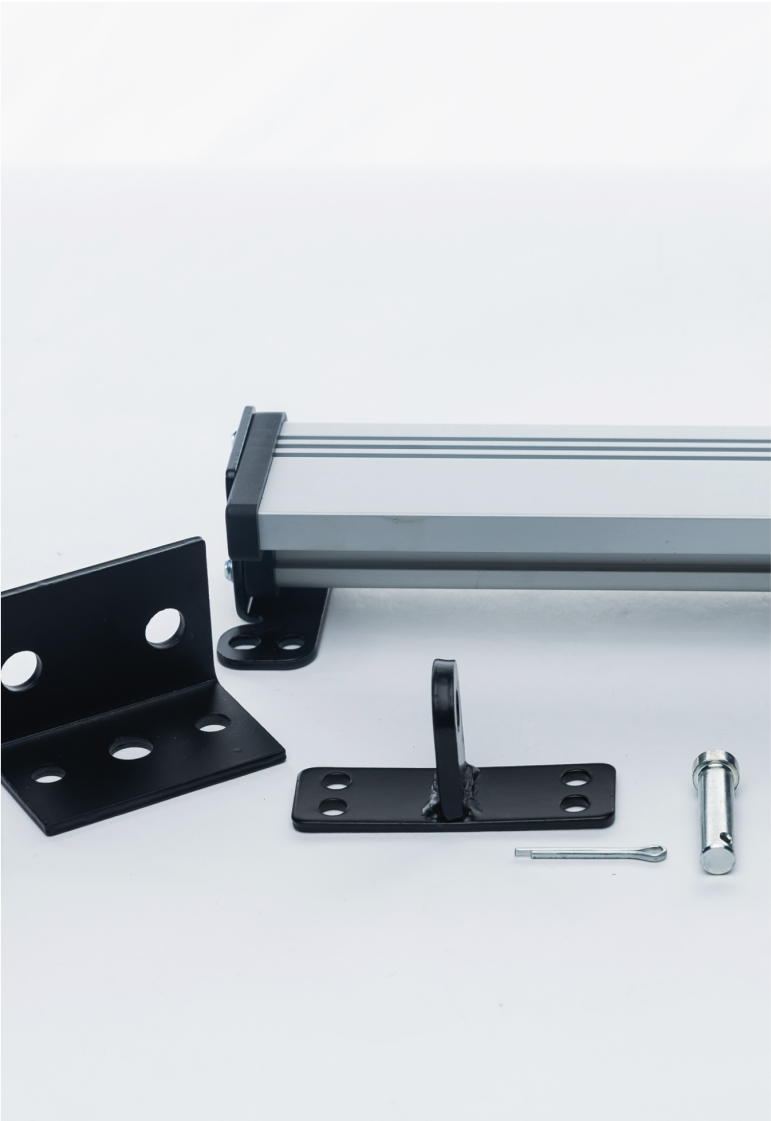
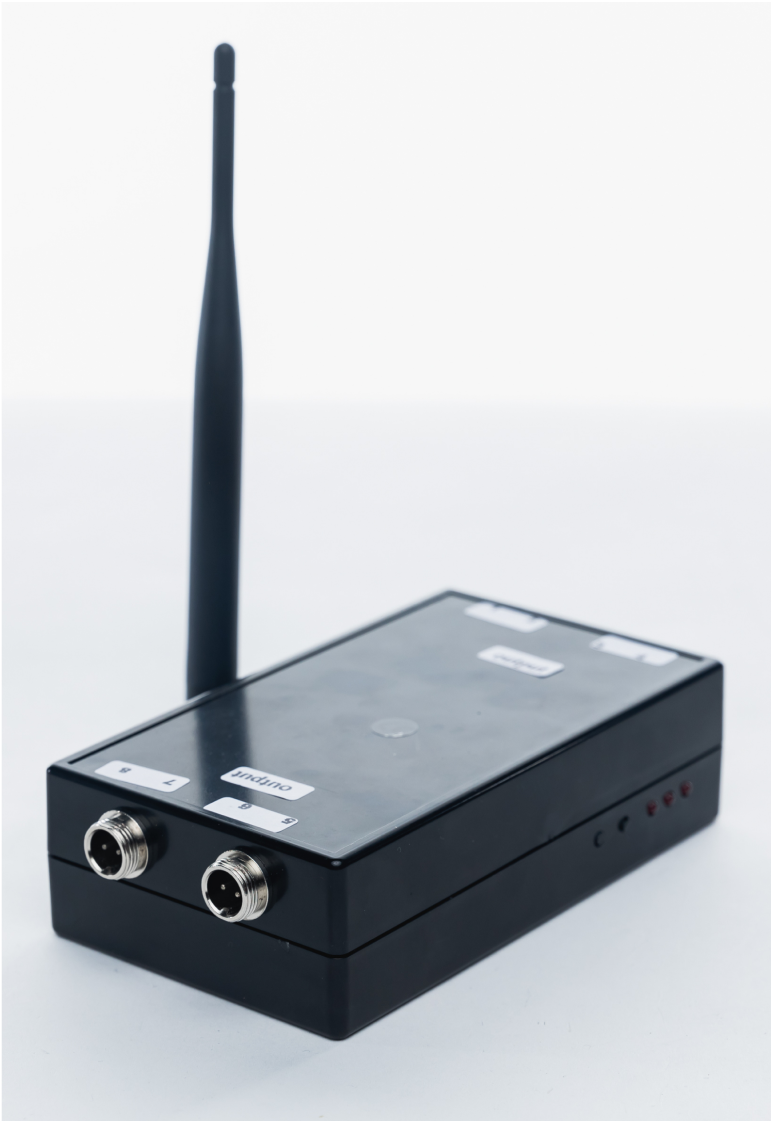
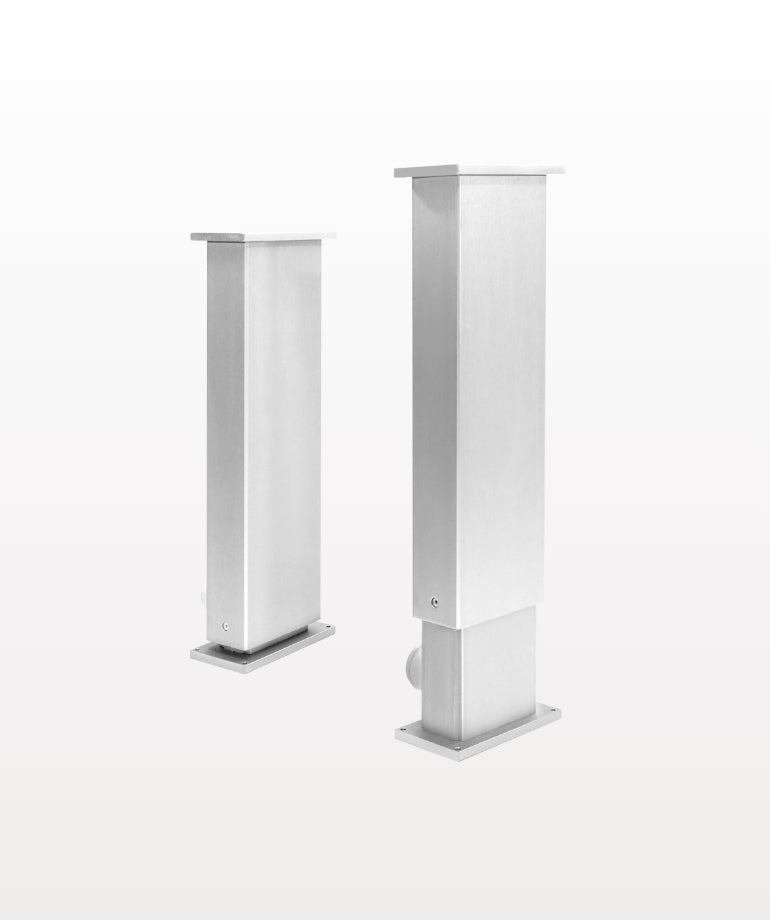
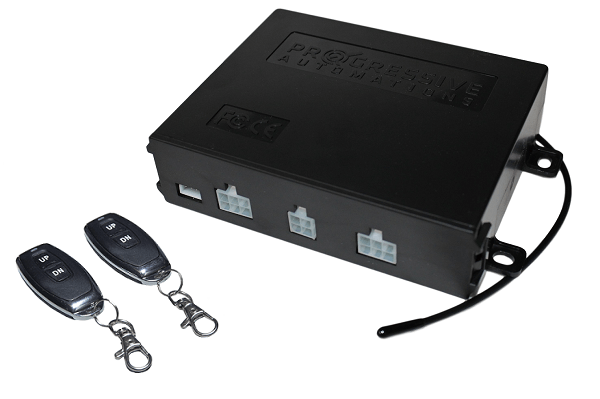
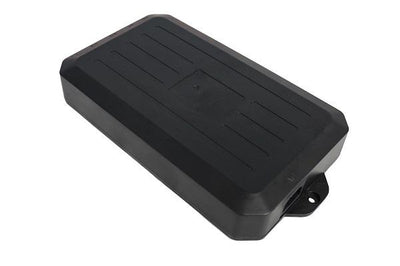
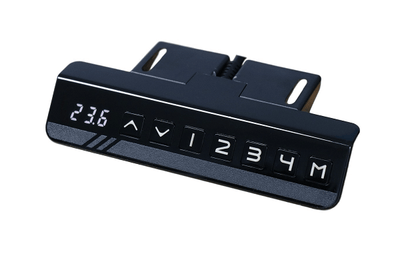
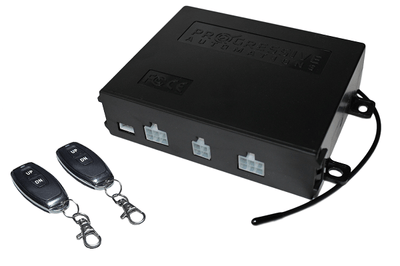
Progressive Automations has all the necessary products for the complete automation of this project. We offer both wired and wireless controls, mounting brackets and table lifts with various weights, depending on the size of the cabinet. If you have questions about this project or any other project, please get in contact with us. We would be happy to answer your questions and find a solution that works for you.


Posted in Technology | Tagged , , , | Comments Off

There are many different types of actuators out there. It can be hard to decide exactly which one you require for which project. In order to determine if electric linear actuators are the way to go, it is best to know everything you can about your project. Here’s a few reasons why an electric actuator might serve your project needs best.


Precision

Without a doubt, electric actuators are highly precise. If your project requires a high level of precision, this is the way to go. That’s not to say that other actuators are not precise, but electric actuators take the cake when precision is key. Electric actuators can provide accuracy up to ten thousandths of an inch.


Component VS Operating Cost

Many people are deterred from electric actuators because they notice the high component cost, but there is another factor that needs to be a part of the equation – operating costs. An electric actuator consumes very little power compared to some other actuators, and that can translate into savings. It can even outweigh the component costs of other actuators.


The operating cost comes down to power draw from the motor. Low voltage circuitry makes the electric actuator an excellent competitor against actuators with lower component costs. Before you strike electric off your list, do some math and see just how much you stand to save. You might be surprised.


Economical

In projects of moderate size, an electric actuator will be the best bet. They have a performance advantage over other actuators and their separate electronics cut down on costs. Instead of replacing a complete system, an actuator or its control system can be replaced as needed.


Portable

An electric actuator means that it can be used anywhere where current is supplied. Control systems can be connected with a battery or to a wall outlet, giving them an advantage over other actuators.


Home Projects

Home projects will benefit from electric actuators. Their movement is smooth and the motor is quiet.


The type of actuator you need will depend on the requirements of your project. Electric actuators have serious benefits over other types, and a business can stand to save a good deal of money by implementing them.


If you would like to know more about electric actuators and why they may be the best option for your project, Progressive Automations is here to answer all your questions.


http://www.youtube.com/watch?v=5amFSoXpaEs

Posted in Electric Actuator | Tagged , , | Comments Off

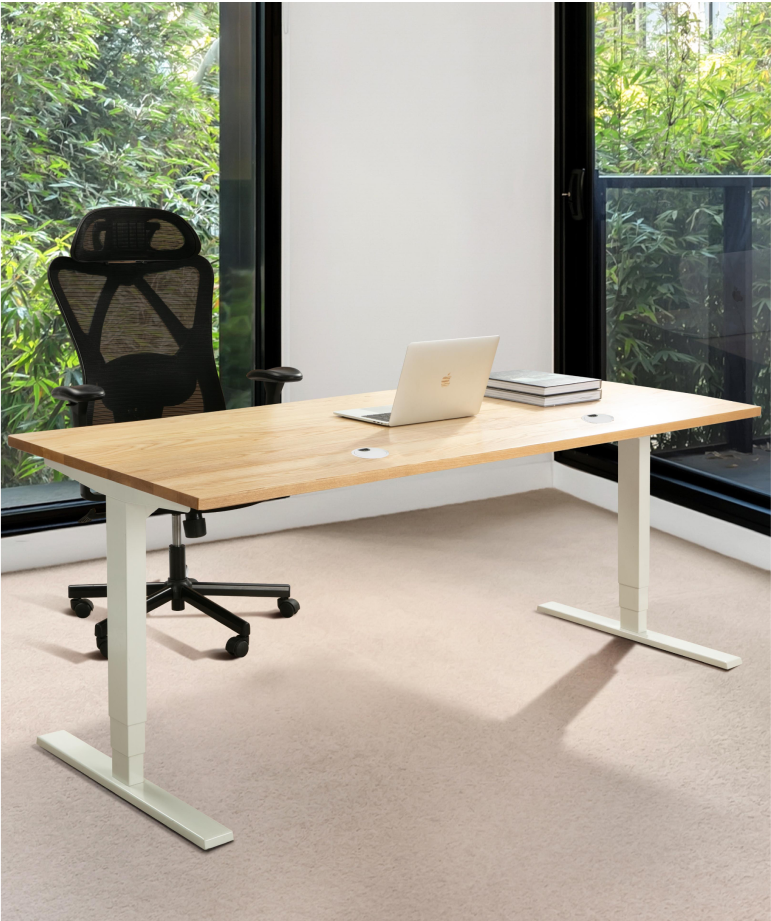
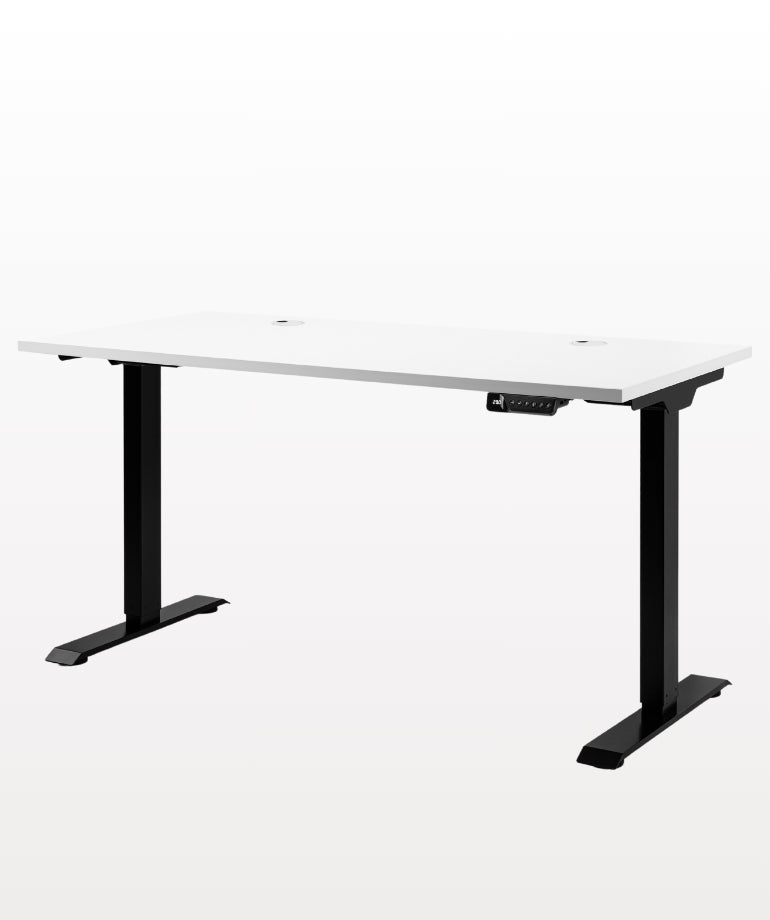
Have you considered using a table lift for your desk at home or work? Many employees and employers spend a great deal of time alternating between sitting and standing. A table lift can accommodate both positions by automating your desk to adjust to your sitting or standing height.  Studies have suggested that by alternating your positions throughout the day, you are more likely to be productive and stay healthy.


As demonstrated in the video below, a two-part desk can be fitted with table lifts so each part of the desk is separately automated. Install a footswitch to the system, and you have complete control over the raising and lowering of the desk to various heights.


What are The Benefits?


Work production studies have indicated that it is preferable to alternate between sitting and standing to reduce the likelihood of injury to your spine. The studies suggest that workers are more productive when they stand, but standing is also harder on the body. The best option is to alternate between the two positions and an automated desk can help to accommodate this.


When you are standing, your desk is still a few feet below you meaning you have to bend over to interact with it, your computer or any drawers.  The automated desk comes up to your height, preventing the need for unnecessary bending.


If multiple workers or family members are using one particular desk, each individual can adjust the height of the desk according to their own needs. Those who prefer to stand at their desk may do so and with the push of a button, it can be switched to a position suitable for seating. The tall and short alike can share the same desk with no hassle.


For employers concerned with productivity, workers who are allowed to alternate between sitting and standing will have a higher productivity and a lower chance of injury, reducing any additional costs associated with health and safety.


Any type of desk can be fitted with an automated table lift system for a reasonable cost. What you spend on equipment, you will get back in productivity.


We’ve Got You Covered


Progressive Automations offers all the products needed for a table lift capable of raising and lowering any desk. Our FLT-06 model is popular for this function and comes with the lifts and control mechanisms for use.   These table lifts are designed to hold up to 175lbs per leg, suitable for most desks.


Posted in Table Lift | Tagged , , | Comments Off

On March 28th, 2013, researchers at the New Jersey Institute of Technology published a study detailing how their robotic ants were able to mimic their biological counterparts. The study, aimed at discovering how biological ants get around their dark, maze-like tunnels, used sugar cube-sized robots that have some of the smallest linear actuators ever used.


The ants use ‘microactuators,’ microscopic mechanisms that control the motion of the object to which they are attached, as well as wheels. Each ant must be able to move free from wired control limitations, so they have been fitted with wireless controls and are programmed to do various tasks through computers. The microscopic size of these actuators requires them to be extremely robust, being able to stand up to continual motion over long periods of time and efficient at using energy.


The study itself has proven that these robots are capable of working together at a number of programmed tasks, and using synthetic pheromone signals to orient themselves. When scattered, they are able to regroup and organize themselves according to their priority level or group together and move a large object by working together.


Everyone has a use for these little guys, it seems. Their ability to swarm together and disperse at pre-programmed intervals provides useful information in the field of nanotechnology. Military applications include rescues missions that are too dangerous for human soldiers. These robots could pass through areas almost completely undetected and converge for tasks that require the strength of numbers. Even industry has a use for them. These ant robots could improve safety and manufacturing processes.


This study also pushes forward the possibility of nanobots being used in the medical field. Just to get an idea of the size of a nanobot, imagine an atom. A nanobot is commonly at least a tenth the size of an atom. Large numbers of these bots can perform surgeries, help destroy cancerous cells or destroy any other unwanted diseases within the body. This technology is still a long way off, but this study spreads light on the methods that could be used to make these robots converge and disperse.


The possibilities of large linear actuators are in full swing in the field of automation for homes and individuals, but technology is just beginning to delve beneath the surface of microactuators. They are being used to break new ground in areas our parents only read about in books.


Posted in Robotics, Uncategorized | Tagged , | Comments Off

If you thought it wasn’t possible for robots to have soul, this video will likely change your mind. These four robots, Harry, Dave, Chuck and Ritchie, presented their composition on Mechatronics TV in 2011 to an enthusiastic audience. And so they should be – these advancements designed by Toyota mean the beginning of a new era for many facets of daily life.


In 2008, Toyota introduced their violin-playing robot. Although the music that sounded was not very complex, it showed that incredibly precise movements requiring precise strength of force can be performed by machines. While the human hand has 29 major joints in it, this robot’s hand has 17, which is leaps and bounds towards complete dexterity.


In 2011, Toyota released a robot that could play the trumpet, along with their other three robot band mates. What this incredible feat required was a re-creation of human lips that were able to make all the same shapes a human’s could. This ‘Partner Robot’ is aimed at assisting in the medical field, nursing and in everyday housework.


What this means for technology has less to do with the music or the instrument and more to do with the robot’s capabilities. The precision movements these ‘Partner Robots’ are capable of are essential for hospitals, work with the elderly, helping the disabled and even common tasks around the household. While the technology still has a ways to go before it is operational in real life setting, these robots may soon be helping walk those in wheelchairs, providing medication and, because of its exceptional weight, support standing or sitting for those who have trouble.


Toyota is not stopping anytime soon. They are designing a whole line of robotics that can assist the elderly disabled and the average person in a variety of ways. Toyota has stated in a press release that these robots are aimed at being available for commercial use sometime this year. They expect to have a fully functioning line of ‘Partner Robots’ in use by 2020.


Healthcare systems all across the world are under a tremendous amount of strain. It is hard to find a family doctor and the wait times for hospitals are enormous. A human requires years of training, and can be physically exhausted if they are worked too long. A robot can solve these issues. They are inexhaustible, provide an extra hand, take the load off the health care professionals and require no training, only programming. With the way things are moving, it won’t be long before these ‘Partner Robots’ are performing brain surgery in between folding the laundry.


Posted in Technology | Tagged , , | Comments Off

In 2010, Ryerson University students designed and built an automated desk with the memory capacity. For university students, this prototype gives any student a desk that can be tailored to any height. For others who spend long hours in seated positions, this table is an easy way to maintain correct posture throughout the day or adjust the height level if needed.


This ergotable uses a single actuator, connected to a desk top and base to control the height. The control system is linked to a computer, which has installed software that can be programmed to remember the individual settings of each user. So long as the software is installed on the computer, any laptop or desktop can use the system, as it is connected through USB to the computer.


When a user approaches the table, it is in its highest position. This prevents the individual from having to bend over to put their items on the desk, reducing the chance of back injury. When logged into the software and seated, the automated desk adjusts to the desired position and the user can begin work. When finished, the individual stands and the desk rises to its highest position once again. The user can now remove their items without having to bend.


Having an adjustable seat does wonders to help with back pains, correct posture and other injuries associated with long periods of seating, but having an adjustable desk gives any user the ability to find the best seated position, and then adjust the desk to the height.


Most experts believe a person can be seated longer without experiencing discomfort if they change their seated position every 15 minutes. With an automated desk and accompanying software, these motions can be pre-programmed into the software to remind the person that 15 minutes has passed. Not only can they then change their chair position, but they can also adjust their desk height to a different level.


Although the desk in the video is designed for a small workspace, any size desk can be fitted with linear actuators and control systems to allow for a completely adjustable height. The importance of ergonomic seating and furniture makes a difference when you are required to remain seated for long periods. With the rise of professionals working from home offices, this affordable solution will not break your wallet or your back.

Posted in Technology | Tagged , | Comments Off

When Boston Dynamics needed a mechanism that could perform like an actual muscle, they found the perfect solution in electric linear actuators. The ‘Cheetah’ robot – the fastest four-legged robot in all of history – is in the midst of the design process for use the military. In its current state of design, the robot can run at almost 30mph (48.2kph), but what makes it run so fast is its biological similarity to the animal it is modeled after.


DARPA (Defense Advanced Research Projects Agency), the funding source for Boston Dynamics’ Cheetah robot, has begun to model many of its robots after the animal kingdom. It is not surprising to see such a sight since much of the animal kingdom has undergone millions of years of evolution in order to create some of the most efficient, adaptive and advanced biological organisms ever seen. DARPA has stated their “goal is not to copy nature,” rather they are using nature as a base for design and technology and building from there. When an animal boasts 0-40mph in three strides, better than a Ferrari Enzo or Corvette Twin Turbo, it just may have a thing or two to teach us.


While designing the Cheetah robot, Boston Dynamics used linear actuators not only to push the legs for motion, but also to contract and stretch the spine, an essential element in the animal’s trademark stride. The motion system for the legs relies on the power of four actuators, one attached to each leg. The actuators are needed to move in very specific patterns to achieve the balance and stride, so while even at high speeds they may look synchronized, they are offset to very precise measurements.


If you look at a picture of a cheetah in the fully extended portion of its stride, you will notice that not all fours legs are touching the ground. What you will also notice is the curvature of the spine. This flexibility allows for much more speed of the animal. The Cheetah robot mimics this physical trait with two actuators comprising what would make up the spine. As the electric linear actuators pump the legs, the two spinal actuators contract and expand, bending the whole body and making it work together to optimize the speed.


Boston Dynamics has worked hard to increase the power of the robot over time. Boston Dynamics CEO Marc Raibert has stated that, “more power means faster motion and more margin in the actuators for better control.” The better the speed and control, the more versatile the robot can become.

The control system used to manipulate the motion of the spine and legs is an outboard system, but ideally will be integrated with the robot so it is completely self-sufficient. In the video, the wires that extend above the Cheetah lead to the current control system.


The Cheetah robot has been funded by DARPA in order to aid the military in defense missions, humanitarian aid and emergency response. The difficult terrain where these missions are being conducted is not always easy to traverse, and robot enables access to areas that other robots, vehicles and humans may not be able to go.


DARPA is far from finished perfecting this machine though. The Cheetah still needs to be kept in one spot by a boom-type device and can only run over flat terrain. DARPA has begun to fund the next generation of Cheetah, called the Wildcat, with the expectation of field-testing in late 2013. This robot is expected to be able to perform at speeds of up to 50mph in outdoor terrain and contain a onboard control system.


Linear actuators have many different uses that push forward some of the most advanced technology known to us today. Among those uses, the simulation of biological organisms is now added. Boston Dynamics has created a machine based on the biology of the cheetah, but with any luck will one day surpass the limits of even the animal kingdom – with the help of linear actuators.


Posted in Technology | Tagged , , | Comments Off

Observatories around the world use linear actuators to control the closing and opening of their roof panels when they want to observe the sky. The La Canada observatory in Avila, Spain uses two actuators to extend the window panels that are controlled from the observatory PC. Taking a lesson from these massive observatories, even an amateur astronomer can create an observatory in their own home.


In the video below, the individuals have created their own observatory in the attic of their home, complete with a movable roof. The system uses a few linear actuators that are built to withstand 400lbs of weight on each side. The roof has been re-constructed so that it creates a tight seal that keeps out the elements when it is closed. This is important if the space is being used as an amateur observatory, since the equipment that is commonly used can be rather expensive, such as computers and telescopes.


The choice to create this space using linear actuators on the top of their house is ideal, because viewing the night sky from the ground can be problematic. If you live in a suburban area, trees, other houses or light posts can be an impediment to viewing the astronomical events. In the video, it is clearly noticeable that the trees are higher than the houses. The light of a whole galaxy can be hidden behind a light post from earth. This makes an observatory constructed on the roof of a home very ideal.


Although the control of the La Canada observatory is linked with a PC, for a project this size, it would likely be best to use a control system with a switch that enables the motion of the roof.


The actuators in this video extend a great deal, but because of the roof, they cannot completely extend and may not provide a complete view of the sky.  In order to complete this project, an amateur astronomer may want to create a panel that extends upward from the floor, allowing the telescope to lift higher than the roof to provide a complete view of the sky regardless of how much or how little the panels open.


High-tech, professional observatories are not the only structures that can use actuators for their observatories. With a bit of ingenuity and know-how, any amateur astronomer can turn their attic – or any room on the top floor of their house – into an observatory.


Posted in Technology | Tagged , , | Comments Off

The world of science fiction is not far off into the future, and heading the field is CHARLI (Cognitive Humanoid Autonomous Robot with Learning Intelligence) L and CHARLI 2, the first human-sized robots to walk this earth with help of liner actuators.


Between 2009-2010 VT’s Robotics and Mechanisms Laboratory designed CHARLI L (for lightweight’), the precursor to CHARLI 2. This robot is one of the latest constructions in a long line of ‘humanoid’ robots dating all the way back to 1986 designed to push humanity forward to an age in which robots are an integral part of our everyday lives.


Virginia Tech has since developed the next level of humanoid robot, named CHARLI 2. This design requires the use of 32 actuators for the robot to function. The greatest challenge that exists for robotics researchers is how to enable it to assess its surroundings and make a decision out of the possibilities. This entails the robot communicating with itself effectively between its 32 actuators, the sensors and its processor. It uses a software program designed to give its actuators the instructions on how much and how fast to extend or contract to create any desired motion. Any motion the robot performs, from a hand movement to a waist bend, is accompanied with the help of a linear actuator. Its bipedal feats, an evolutionary trait only exhibited by humans, would not be possible without the use of linear actuators to   adjust the thighs, calves, knees and feet.


The design of CHARLI is inspired by human form and the actuators serve as human muscles. They contract and extend, not unlike a human’s 640 muscles, so that CHARLI 2 can interact with the world around it.


The military is funding the continued research by VT to create CHARLI robots that are useful in firefighting.  Researchers hope that the future for CHARLI is bright, having it aid in elderly care or domestic chores. CHARLI is already able to pick itself up if it falls, hold delicate objects, walks and even maintains balance if given a good shove.


This award-winning robot is a game changer. This is the first life-sized humanoid robot that has such versatile qualities. As time moves forward, those who are continuing to develop CHARLI hope to one day see him folding laundry, greeting guests, answering phones, fetching wayward soccer balls and any other task that the average person would prefer to have a robot do.


Posted in Robotics | Tagged , | Leave a comment

High Speed Linear Actuator delivers exceptional output for industrial machines. The design and make of these actuators is marvelous and different from the rest. We at Progressive Automations, Inc manufacture high end High Speed Linear Actuator for industrial and commercial purposes. Our high-end manufacturing facility delivers outstanding products for an affordable cost. One of the striking features of our products is the customization offered. We ensure to provide you with complete customization for the products we offer, if you have a specific requirement then feel free to call us for more details.

Customized products is one of our main services, we have technicians working round the clock to offer you with fully customized products. We ensure all our products are tested several times before dispatching to the ultimate customer, if any our products fail the quality test then they are immediately discarded from the production list. All our products are manufactured by adhering to International Quality and manufacturing standards, it ensures in giving the best output at all times.

Our design of actuators has maximum benefits; they can be installed in any machine that requires linear motion. We do installation of these actuators; we ensure the entire packaging and dispatching from our side. Progressive Automations, Inc provides all the information that you need to know about the functioning of actuators. For more information, please feel free to log on to http://progressiveautomations.com. Our website will provide you with in-depth information about the working of actuators, if you come across any doubts then give us a call, as we would love to answer all your questions.

Posted in Linear Actuators | Leave a comment


Copyright 2010 Progressive Automations | All rights reserved